Top Videos
Top Searches
Moods & Genres
Autumn
Chill
Commute
Energize
Feel-good
Focus
Gaming
Party
Romance
Sad
Sleep
Summer
Winter
Workout
African
Arabic
Blues
Bollywood & Indian
Classical
Country and Americana
Dance and electronic
Decades
Family
Folk and acoustic
German hip-hop
German pop
Hip-hop
Indie and alternative
J-Pop
Jazz
K-Pop
Latin
Mandopop & Cantopop
Metal
Pop
R&B and soul
Reggae and caribbean
Rock
Schlager
Soundtracks and musicals
Search music and videos
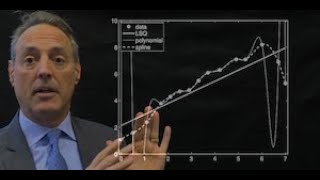
Optimization as the cornerstone of regression
29:11
|
6,518 views
|
Download MP3
Related Videos
Beschleunigung wissenschaftlicher Entdeckungen durch maschinelles Lernen | J. Nathan Kutz | TEDxUofW
Physik-informierte KI: Was funktioniert wirklich? | Nathan Kutz
Automated Discovery of Physical Models with Shallow Recurrent Decoders | Nathan Kutz
Lineare Operatoren und ihre Adjungierten
March 28, 2025 | Keynote Speaker: Nathan Kutz
Kapitel 2.5 - Eigenfaces
Wissenschaftliches Rechnen mit J. Nathan Kutz
Regression and Ax = b: Over- and under-determined systems
Deep Convolutional Neural Networks
Introduction to Machine Learning: Neural Network Architectures
Neural Network Basics
J. Nathan Kutz: "Coordinates, governing equations and limits of model discovery"
Chapter 11.6 - Implementing the Chebychev Transform
Chapter 5.2 - Derivative Based Optimization
Scientific Computing with J Nathan Kutz
Nathan Kutz:"Data-driven Discovery of Governing Physical Laws"
Sturm-Liouville Theory
Kapitel 7.3 – Filme und Animationen
POD für partielle Differentialgleichungen
Image Analysis 2
Der Forced Duffing Oscillator
Chapter 9.3 - Finite Difference Methods: Fast Poisson Solvers and FFT
Kapitel 14.9 – Diffusion & Bildverarbeitung
Greensche Funktionen, Delta-Funktionen und Verteilungstheorie
Introduction to Python: Root Finding Algorithm
Angewandte Lineare Algebra GMRES
Gaussian Elimination
Green-Funktionen für Sturm-Liouville-Probleme
Chapter 10.6 - Time and Space Stepping Schemes: Optimizing Methods
Kapitel 8.2 – Wissenschaftliches Rechnen: Zeitschrittfehler und Stabilität
Data-driven model discovery: Targeted use of deep neural networks for physics and engineering
Scientific Computing: Time-Stepping Implementation
Order Parameters and Dominant Balance
PDE lines1
Introduction to Machine Learning: Feed-Forward NN
Anfangsschichten und Grenzzyklen
Einführung in Python: Matrizen & Vektoren
Chapter 9.4 - Finite Difference Methods: Comparison of Solution Techniques
Time delay embedding for Koopman
Kapitel 11.7 – Berechnung von Spektren mit Spektralmethoden
WKB und Wendepunkte
Kapitel 6.1 – Maschinelles Lernen ist Kurvenanpassung
Kapitel 5.4 – Simplex-Verfahren
UWEE Research Colloquium: January 30, 2018 - Nathan Kutz, University of Washington
Kapitel 4.4 – Sparsity-Förderung für das Lernen von Kurvenanpassungen
Kapitel 8.8 Lineare Operatoren und Spektrenberechnung
Spektralverfahren1
Kapitel 14.2 – Radardetektion & Filterung
Kapitel 8.6 – Randwertprobleme: Direkte Lösung und Relaxation
Neural Networks for Dynamical Systems
Kapitel 15.6 – Robuste PCA
time frequency 2
Scientific Computing: Numerical Integration
POD and the Discrete Empirical Interpolation Method
Kapitel 12.1 – Finite-Elemente-Methode
Numerical Integration
USNCCM16 Plenary: J. Nathan Kutz
Chapter 9.2 - Finite Difference Methods: Iterative Solution Methods for Ax=b
Kapitel 8.9 – Einführung in maschinelles Lernen: NN-Zeitschrittverfahren
Introduction to Signal Processing: Fourier Series Expansion of Signal (Lecture 14)
Data Analysis: Clustering and Classification (Lec. 2, part 1)
Chapter 13.2 - Random Variables
LU Decomposition
Nathan Kutz - The Dynamic Mode Decomposition - A Data-Driven Algorithm
Kapitel 7.1 – Visualisierung
Kapitel 13.3 – Hypothesentests und statistische Signifikanz
Scientific Computing: Numerical Differentiation
Zeitverzögerungen für die Modellentdeckung
kgml2021: Closing Session (ML2), J Nathan Kutz, University of Washington
Kapitel 16.3 – Bildtrennung in Python
Data Analysis: Clustering and Classification (Lec. 2, part 3)
Kapitel 19.1 – Reinforcement Learning
time frequency 1
Floquet Theory
Kapitel 8.1a – Wissenschaftliches Rechnen: Zeitschrittverfahren
Datenanalyse: Clustering und Klassifizierung (Vorl. 2, Teil 4)
Einführung in maschinelles Lernen: Backpropagation
Kapitel 15.4 – Hauptkomponenten, Diagonalisierung und SVD
Kapitel 19.2 – Markov-Entscheidungsprozesse für RL
Kapitel 21.1 – Datenassimilation
Scientific Computing with Python: Logic, Loops & Iterations
Machine Learning to Discover Physics and Engineering Principles with Nathan Kutz - #162
Einführung in maschinelles Lernen: Entscheidungsbäume
Kapitel 22.3 – Basismodelle & Fine-Tuning
Datenanalyse: Clustering und Klassifizierung (Vorlesung 2, Teil 2)
Challenges in Biomathematical Modeling - Lecture 19 - Nathan Kutz (Univ. of Wahsington, Seattle)
FiniteElemente2
Linear Stability and Order Parameters
Kapitel 11.3 – Implementierung spektraler Methoden
Applied Linear Algebra: Solvability & Regularization
Kapitel 4.1 – Kurvenanpassung
Challenges in Biomathematical Modeling -- Lecture 18 - Nathan Kutz (University of Washington, USA)
Wissenschaftliches Rechnen: Analyse von Fehlern bei der numerischen Differenzierung
Discovering AI@UW 2022 - Nathan Kutz - Data-driven accel. of scientific & engineering discovery
Continuous Formulation of POD
POD with Symmetries: Rotations and Translations
Regular perturbation theory
Computational Neurology: Compromised axonal functionality after degeneration and TBI
Lückenhafte POD
Datenanalyse: Clustering und Klassifizierung (Vorl. 3, Teil 1)
Einführung in Python: Logik FOR/IF
Datenanalyse: Clustering und Klassifizierung (Vorlesung 3, Teil 2)
Introduction to Signal Processing: The Fourier Transform (Lecture 17)
Kapitel 4.3 – Datenanpassung mit Python
Poincaré Podcast #19 - J. Nathan Kutz
J. Nathan Kutz (University of Washington): Data-driven model discovery and physics-informed learning
Bifurkationstheorie
Kapitel 3.2 – Numerische Integration
J. Nathan Kutz (University of Washington, USA)
Einführung in die Signalverarbeitung: Analyse von Bode-Diagrammen (Vorlesung 28)
AAAI 2022 ADAM Workshop | The Future of Governing Equations | Nathan Kutz
Kapitel 15.2 – Die SVD im weiteren Kontext
Portable Video Studio: Setting up studio
FiniteElements1
Dynamic Mode Decomposition (Theory)
Gappy Measurements: Maximal Variance
Introduction to Signal Processing: Exponential Signals (Lecture 3)
Data Analysis: Clustering and Classification (Lec. 1, part 1)
Waves in Fluids III - Nathan Kutz
Computational Neurology: Computational toolbox for FAS diagnostics
Eigenfunction expansions
Chapter 10.5 - Time and Space Stepping Schemes: Operator Splitting Methods
Chapter 10.3 - Time and Space Stepping Schemes: Stability Analysis
Kapitel 8.3 – Fortgeschrittene Zeitschrittalgorithmen
Model Discovery for PDEs
Systems of Equations: Solving Linear Systems, Part 1
Lake Como School (Machine Learning Photonics, 15-19 March 2021) Nathan Kutz (1)
Kapitel 13.1 – Grundlegende Wahrscheinlichkeitskonzepte
Kapitel 15.5 – Hauptkomponenten & Proper Orthogonal Decomposition
CompNeurologyIntro
Kapitel 21.2 – Datenassimilation, Sampling & Kalman-Filter
Chapter 1.1 - Vector and Matrices
Online interpolation point refinement for ROMs using genetic algorithm
Unüberwachtes Lernen: K-Means-Clustering
Kapitel 1.5 – Plotten, Importieren & Exportieren von Daten
Vectors and Matrices
MSML2020 Invited Talk by Prof. Nathan Kutz, University of Washington
PDE lines2
Überwachtes Lernen und Support-Vektor-Maschinen
Nathan Kutz, University of Washington
Lake Como School (Machine Learning Photonics, 15-19 March 2021) Nathan Kutz (2)
Randwertproblem 2
Applied Linear Algebra: Iteration Methods
Data Assimilation lecture 3
Introduction to Signal Processing: Time-Frequency Filtering (Lecture 25)
Independent Component Analysis 2
Eigenfaces
FiniteElements3
Statistische Methoden 2
Supervised versus Unsupervised Learning
Targeted use of deep learning for physics-informed model discovery by Nathan Kutz
Modellfindung für dynamische Systeme
PDE-Zeilen4
Kapitel 15.8 – Koopman-Operatoren
jc wi2016 lusch
Kapitel 22.4 – Agentische KI
Applied Linear Algebra: Tensor Decompositions
Angewandte lineare Algebra: Matrixzerlegungen
ROM introduction
Chapter 2.2 - Iterative Methods Ax=b
Applied Linear Algebra: QR & Householder
Neural Network & Dynamics
Data Analysis: Clustering and Classification (Lec. 1, part 3)
Thoughts on the Future of Governing Equations
Dimensionally Consistent Learning with Buckingham Pi
Kapitel 16.2 – Bildtrennung
Einführung in die Signalverarbeitung: Eigenschaften von Signalen (Vorlesung 5)
Multiple-Scale Expansions
Kapitel 1.2 – Logik: IF und FOR
The Backpropagation Algorithm
Rotating Detonation Engine (RDE) – Dynamik und Bifurkationen
Einführung in die Signalverarbeitung: LTI-Systeme (Vorlesung 6)
Angewandte lineare Algebra: Bedingung Ax=b
Kapitel 22.1 – Transformer & Foundation Models: Vektorräume für Word Embeddings
Statistische Methoden
Compressed Sensing
Introduction to Machine Learning: Supervised versus unsupervised learning
AMATH50 Workshop 6: Data science methods
Kapitel 14.5 – Wavelets
05 Deep Learning for the Discovery of Coordinates and Dynamics,
Applied Linear Algebra: QR Decomposition
Statistical Methods 3
POD and Soliton Dynamics
compare
Kapitel 15.7 – Dynamic Mode Decomposition (DMD)
Machine-Learning-basierte ROMs
Kapitel 4.2 – Polynomielle Anpassungen und Splines
Werkzeugkasten für die Signalverarbeitung
J Nathan Kutz
Kapitel 16.1 – Independent Component Analysis (ICA)
Modal Analysis and Mode Coupling
Unabhängige Komponentenanalyse 1
Applied Linear Algebra: Implementing randomized LA
Gappy Measurements: Minimize Condition Number
Kapitel 10.4 – Zeit- und Raumschrittverfahren: Vergleich von Zeitschrittverfahren
Spectral6
Dynamic Mode Decomposition Code
Phasenraumanalyse für nichtlineare Dynamik
Time Frequency Analysis & Wavelets
Kapitel 3.1 – Numerische Differentiation
Introduction to Signal Processing: Bode Plots and Differential Equations (Lecture 27)
Boundary Layer Theory
Eigenvectors and Eigenvalues
Data Analysis: Clustering and Classification (Lec. 1, part 2)
Der Van-der-Pol-Oszillator
jc wi2016 rudy
Kapitel 1.0 – Python herunterladen
Predator-prey models
The Poincare-Lindsted Method
Kapitel 2.4 – Eigenwerte und Eigenvektoren
Unsupervised Learning: Mixture Models
Nathan Kutz: The future of governing equations
Kapitel 5.5 – Genetische Algorithmen
jc wi2016 mangan
Modellauswahl: Informationskriterien
Kapitel 19.3 – Strategieoptimierung
Neues Buch!!! Datengetriebene Wissenschaft und Technik: Maschinelles Lernen, dynamische Systeme u...
Koopman Theory + Embeddings
Modellauswahl: Kreuzvalidierung
Introduction to Signal Processing: Continuous LTI Systems (Lecture 7)
POD carlberg 2
mrdmd summary kutz
Introduction to Machine Learning: Support Vector Machines
Kapitel 14.7 – Spektrogramme und die Gabor-Transformation
Das Pendel und die Floquet-Theorie
Zeitschrittverfahren und Flow Maps
Kapitel 11.4 – Pseudospektrale Methoden
Image Analysis 3
Kapitel 3.4 – Differentiation von verrauschten Daten
Kapitel 3.3 – Implementierung von Differenziations- und Integrationsalgorithmen
Der stochastische Gradientenabstiegsalgorithmus
abs wi2016 sargsyan
Applied Linear Algebra: GMRES & BICGSTAB MATLAB
Introduction to Signal Processing: Convergence of Fourier Series (Lecture 12)
Nonlinear Regression and Gradient Descent
Chapter 5.3 - Linear Programming
Normal Forms and Imperfections
Kapitel 14.3 – Radarerkennung & Mittelwertbildung
Neuronale Netze: 1-Schicht-Netzwerke
Kapitel 1.4 – Funktionen, Inputs & Outputs
Introduction to Machine Learning: Stochastic Gradient Descent
Kapitel 8.7 – Implementierung von Python für Randwertprobleme
Supervised Learning and Classification Trees
Introduction to Signal Processing: Filters and Properties (Lecture 26)
Kapitel 1.3 – Iterationsverfahren: Newton-Raphson
Kapitel 8.1b - Zeitschrittverfahren
The Snowman
POD carlberg 5
Einführung in die Signalverarbeitung: LTI-Systemeigenschaften (Vorlesung 8)
Applied Linear Algebra: Conditioning Least Squares
Chapter 9.1 - Finite Difference Methods and Numerical Discretization
Portable Video Studio: The results!
Data Fitting: Matlab Implementation, Part 2
Optimal Basis Elements: The POD Expansion